Cart
Epithalon: Chemical Information
Chemical & Technical Specifications
| Compound | Epithalon (Epitalon) |
|---|---|
| CAS Number | 307297-39-8 |
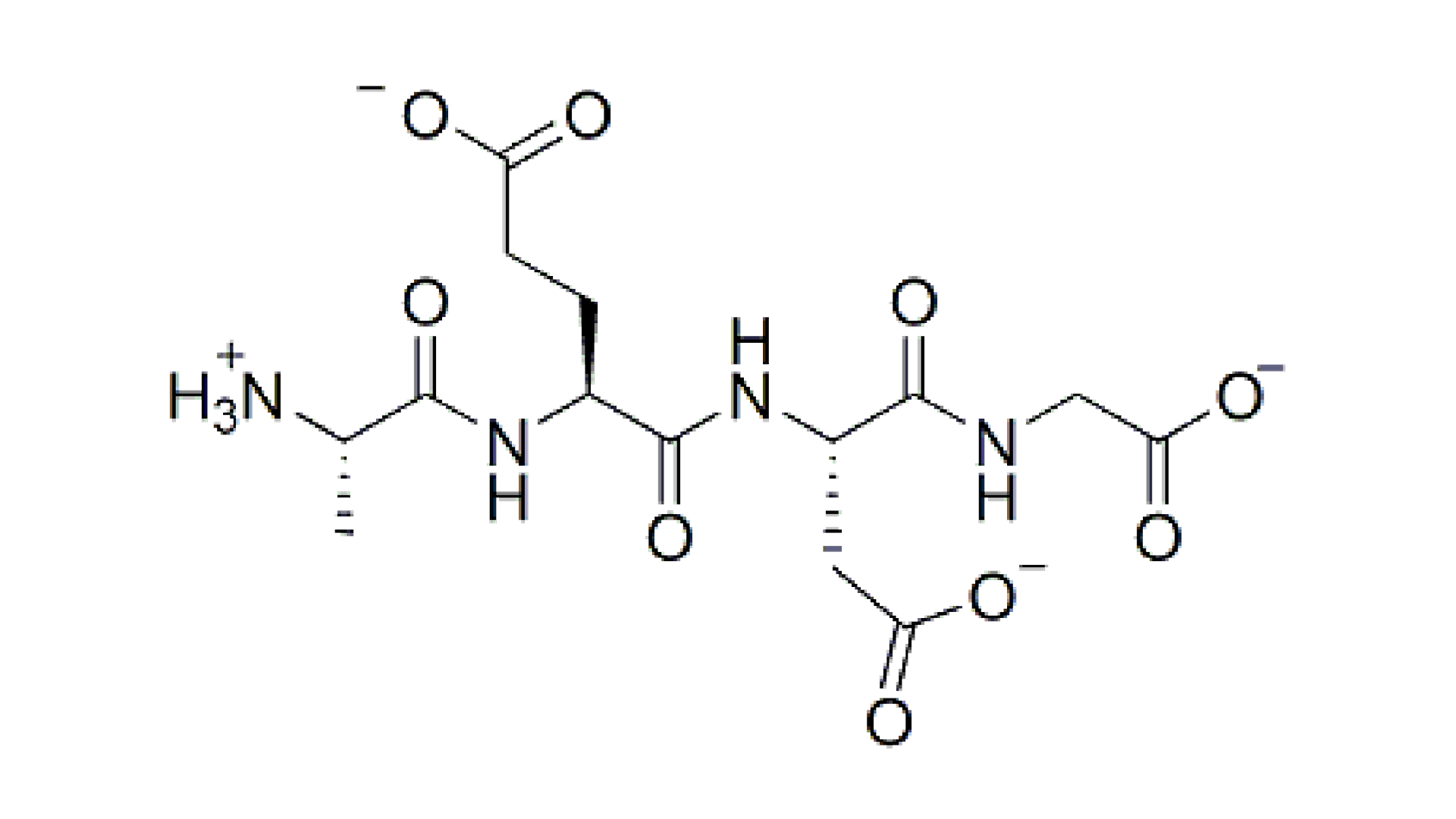
| Molecular Formula | C14H22N4O9 |
| Molecular Weight | 390.3 g/mol |
| Peptide Sequence | Ala-Glu-Asp-Gly |
| Synonyms | Epitalon, Epithalone, AGAG tripeptide-derived |
What is Epithalon?
Epitalon, or Epithalon, is a 4-amino acid peptide with the sequence Alanine-Glutamate-Aspartate-Glycine, which was first described as an possible metabolically active compound isolated from bovine pineal gland extract the early 2000`s by a group of researchers in St. Petersburg, Russia. 1 This pineal gland extract is sometimes referred to as epithalamin. The effects of epithalamin have been known far longer, dating back as far as 1955.2 The pineal gland is located in the brain, known for the secretion of melatonin and the regulation of the day/night cycle in humans and other vertebrates.
Early experiments in the UdSSR have shown that epithalamin as a life-prolonging effect on old animals. For a long time, it was not clear which constituent of epithalamin was responsible for this phenomenon. Eventually however, it was discovered that this constituent was epitalon.
Preclinical studies
Effects on lifespan
Especially interesting is the reported ability of epitalon to increase the length of the telomers, protective DNA sequences at the ends of chromosomes, which prevent the loss of DNA in each replication cycle of the cell. Telomer length is a important factor for biological age, as the breakdown of telomers is observed when individuals age. It was shown in a cell culture of human fibroblast epitalon was able to increase telomer length by inducing the enzyme telomerase. This observation could be responsible for the observation that epitalon has a life-prolonging effect in many studies.3 Due to the telomere limitations, human cells have a specific limited of divisions, after which the cells become inactive due to shortened telomers. The addition of epitalon to a culture of human cells helped to increase the maximum divisions possible by 30 %. This property of epitalon could potentially help to slow down the aging process in humans or even to revert this process to a certain extent. 4
A study performed on rats showed that epitalon and epithalamin both also possess antioxidative properties. This was determined by the increased expression of antioxidant enzymes like superoxide dismutase and ceruloplasmin. This increased production of such enzymes may contribute to a deceleration of aging mechanisms in a variety of tissues. Antioxidant effects were also seen in in vitro experiments.5
The mean life span of rats exposed to constant illumination is decreased due to the disruption of the natural circadian rymth. Epithalon (0.1 μg daily 5 times a week from the age of 4 months) did not change the life span of rats living under conditions of standard day/night regimen, while in rats exposed to constant light it promoted prolongation of the maximum life span. This shows epitalon is involved on the regulation of the day/night cycle. Epitalon exhibited virtually no effect on the development of spontaneous tumors in rats exposed to standard illumination, but significantly inhibited their development in rats exposed to natural light.6
Stress induced by unnatural lighting does also influence the hormone levels and reproductive cycle in female rats. Both epitalon and melatonin were effective in mitigating the negative influence of light stress in the reproductive cycle, especially in older animals.7 On another study, epitalon was shown to decrease the frequency chromosomal abnormalities and did not alter food consumption, body weight or mean life span of mice. It did however increase the maximum life span in some of the animals.8
A prolonged lifespan was also observed in the insect Drosophila melanogaster. Already at very low concentrations of epitalon (0.1×10⁻⁶ wt.%) it increased the lifetime of the flies by 11-16%. This indicated that the effect of epitalon is rather due to influencing gene expression in Drosophila, rather than due to direct effects of the peptide.9 The effect in drosophila also may be related to its antioxidant properties.10
Genes & Chromosomes
Epitalon seems to be responsible for regulating a variety of genes. In mouse heart cells, epitalon altered the expression of 98 genes. If epitalon and vilon, another small peptide with potentially life-prolonging effects, were administered together, 144 genes were modulated. On some cases, gene expression was increased by over 6-fold.11 Further observations of a direct effect on gene expression were made in other studies.12 The incidence of chromosomal aberrations in mice was shown to be decreased by up to 30 % of mice treated with epitalon. The mice were monthly subcutaneously injected with epitalon (1 μg/mouse, 5 times a week) or with 0.1 ml physiological saline. Melatonin, on the other hand, had no effect on chromosomal aberrations.13
The effect of stabilizing DNA prompted researchers to investigate whether the increased stability of DNA had a positive effect on tumor formation. Mice with a genetically increased risk for cancer were injected with epitalon in a dose of 1 mg subcutaneously 5 times a week to from the 2nd month of life to death. Indeed, the peptide decreased the frequencies of malignant tumors and prolonged the average and maximum lifetimes of mice by 13.9%, respectively. Epitalon also decelerated the development of age-related disturbances in reproductive activity.14 Further studies came to similar conclusions.15–17
Similarly, epitalon can not only stabilize the DNA of mice that have a natural susceptibility to cancer and new mutations, but it did also protect from the DNA altering effects of the common immunosuppressive drug cyclophosphamide.18 This DNA stabilizing effect against carcinogenic substances was again shown in rats, which received 1,2-dimethylhydrazine to observe new formation of cancer with and without epitalon (5 x 1 µg per animal). In rats from the group treated with epitalon, tumors
were smaller than in control animals. The incidence, as well the multiplicity of tumors were significantly decreased as well.19,20
Ophthalmology
There are also reports indicating a positive effect of epitalon on the retina, the light sensitive structure of the eye, in rats. Epitalon (1.0 μg in 0.2 ml sterile physiological saline) was injected intraperitoneally in different generations of rats suffering from a hereditary degenerative disease of the retina. After 53 days, no electrical activity of the retina was observed in the control animals, while those injected with epitalon showed overall increased retinal activity, while some activity was retained as long as 83 days. This effect may be due to the DNA stabilizing and/or antioxidative effects of epitalon.21,22
Studies in monkeys indicate epitalon is most effective in older individuals. If old rhesus monkeys received 10 μg epitalon in 1 ml physiological saline intramuscularly, their melatonin production was restored to the levels of younger rhesus monkeys. This was also followed by a normalized day/night rhythm.23
If applied orally, vilon and epitalon, improved transport characteristics of the small intestine in aged rats. Epitalon and vilon both enhanced passive glucose update, while glycine was better absorbed only under epitalon.24 Effects on digestive enzymes were also investigated. Epitalon did partially restore the enzymatic activities of older rats back to those of younger individuals.25
Other
Experiments on rats missing their pineal gland indicated that epitalon also serves as a immune system regulator, preventing the abnormal growth of immune cells in spleen tissue. 26 A study in older chickens and chickens without pineal gland reports shifts in the level of immune cells as well, but also in red blood cells. The peptide cortagene (Ala-Glu-Asp-Pro), which differs in only one amino acid from epitalon, did not induce the same effects.27 In rats, epitalon induced a shift in types of blood cells, from lymphocytes from neutrophils, which corresponds to a different type of general immune system response.28 Further evidence that epitalon has a stimulating effect on some types of immune cells was collected in mice.29
Clinical studies
In the course of aging both monkeys and people reveal decreased night and average daily level of melatonin in the blood plasma and reduced hormone circadian rhythm amplitude, which evidence the disorder of the pineal gland melatonin releasing function. Both epithalamin and epitalon recover night release of endogenous melatonin and lead to the normalization of the hormone circadian rhythm in the blood plasma.30
A human clinical trial conducted on a sample of 162 retinitis pigmentosa patients found that epitalon produced a positive clinical effect in 90% of cases in the treated group. The patients were injected with injected with 5 µg of epitalon close to the eyeball for 10 days. In most patient, the electrical activity of the retina, measured by Electroretinography, was improved.31
A further human clinical trial conducted on a sample of pulmonary tuberculosis patients, epitalon did not appear to correct pre-existing structural aberrations of chromosomes associated with telomere
degradation, but did appear to exert a protective effect against the future development of additional chromosomal aberrations.32
Researchers assessed the protective effects of thymic (thymalin) and pineal (epithalamin) peptides in 266 elderly patients during 6–8 years. The bioregulators were applied for the first 2–3 years of observation. All agents were injected intramuscularly daily at 10 mg for 10 days (at 100 mg per course), two courses one year apart. A separate group included 10 women and 10 men treated with thymalin and epithalamin simultaneously at 10 mg each for 10 days annually for 6 years. The obtained results convincingly showed the ability of both epithalamin and thymalin to improve the indices of cardiovascular, endocrine, immune and nervous systems, homeostasis and metabolism. Such a significant improvement in the health state of the peptide-treated patients correlated with decreased mortality rate during observation: 2.0–2.1-fold in the thymalin-treated group; 1.6–1.8-fold in the epithalamin-treated group; 2.5-fold in the patients treated with thymalin plus epithalamin as compared to the control. A separate group of patients was treated with thymalin in combination with epithalamin annually for 6 years and their mortality rate decreased 4.1 times as compared to the control.32
Another prospective cohort study on a sample of 79 coronary patients spanning in excess of 12 years found improved metrics of physical endurance, circadian rhythm, and carbohydrate and lipid metabolism in the treated group relative to the control group following 3 years of biannual epithalamin treatments, as well as a 50% lower rate of cardiovascular mortality, a 50% lower rate of cardiovascular failure and serious respiratory disease, and a 28% lower rate of overall mortality.33
Over three years 39 coronary heart patients received, in addition to basic therapy, regular courses of epithalamin. Long-term treatment with epithalamin (6 courses over 3 years) decelerated aging of the cardiovascular system, prevented age-associated impairment of physical endurance, normalized circadian rhythm of melatonin production and carbohydrate and lipid metabolism. The protocol of peptide treatment was as follows: 10 mg in 2 ml saline intramuscularly, every 3 days, 5 injections per course, with 6-month intervals between the courses. A significantly lower mortality in the group of patients treated with epithalamin in parallel with basic therapy also indicated a positive effect on life quality and life span. 33
A randomized clinical study of epithalamine spanning over 12 years was carried out in elderly patients with coronary heart disease and accelerated aging of the cardiovascular system. Long-term treatment with epithalamine decreased the degree of cardiovascular aging. After 12 years the number of elderly subjects dead in the group treated by epithalamine was 28% lower than in the control group, despite the same basic therapy. Cardiovascular mortality was 2-fold lower in patients treated by epithalamine; the incidence of cardiovascular failure and respiratory diseases was 2-fold lower in this group. Long-term treatment with epithalamine was associated with a positive effect on the long-term life prognosis in elderly subjects with accelerated aging.34
Conclusion
Epitalon shows remarkably positive results in animal and human trials. There is good evidence that epitalon has the ability to prolong the lifespan. This seems to be due to epitenon’s ability to regulate the genes for anti-oxidative enzymes and telomerase, as well as several other proteins. This leads to a stabilization of cell DNA and a higher ability of tissues to regenerate.
Epitalon cannot be ingested orally, all studies use injection techniques. There is the option this peptide might be effectively absorbed in sublingual or intranasal applications, but there are no studies exploring this possibility. Effective doses for injection are in the range of 10 mg peptide per injection. Additionally, the biggest effects are expected to be seen in older individuals, leading to a “rejuvenation” of some metabolic processes. In younger individuals, it may lead to a slow down of the aging process.
A number of human clinical trials with epithalamin have been conducted on the around the year 2000, with very promising results. However, almost all studies on epitalon and epithalamin have been conducted by the St. Petersburg Institute of Bioregulation and Gerontology. Since then, no more clinical data or epitalon or epithalamin has been published. Hopefully, other groups of researchers will re-evaluate the data published so far and confirm the results.
Further Reading
- Reparative Effect of Epithalon on Pineal Gland Ultrastructure in γ-Irradiated Rats (2001)
- Immunohistochemical and Morphometric Analysis of Effects of Vilon and Epithalon on Functional Morphology of Radiosensitive Organs (2001)
- A characteristic of the effects of melatonin and epithalon on the state of c-fos gene in the neurosecretory nuclei of the hypothalamus in an experiment (2011)
- Molecular Dynamics Simulation for the Interaction of Lysine Dendrimers with Therapeutic Peptides. New Advances and New Methods (2018)
- Fluorescent Microscopic Study of Epithalon Binding in Maternal and Fetal Rabbit Tissues in Health and under Conditions of Placental Insufficiency (2005)
- Effects of Short Peptides on Thymocyte Blast Transformation and Signal Transduction along the Sphingomyelin Pathway (2002)
References
- Kozina LS, Arutjunyan AV, Khavinson VK. Antioxidant properties of geroprotective peptides of the pineal gland. Arch Gerontol Geriatr. 2007;44 Suppl 1:213–216. doi: 10.1016/j.archger.2007.01.029.
- Anisimov VN, Khavinson VK, Morozov VG. Twenty years of study on effects of pineal peptide preparation: epithalamin in experimental gerontology and oncology. Ann N Y Acad Sci. 1994;719:483–493. doi: 10.1111/j.1749-6632.1994.tb56853.x.
- Khavinson VK, Bondarev IE, Butyugov AA. Epithalon peptide induces telomerase activity and telomere elongation in human somatic cells. Bull Exp Biol Med. 2003;135:590–592. doi: 10.1023/A:1025493705728.
- Khavinson VK, Bondarev IE, Butyugov AA, Smirnova TD. Peptide promotes overcoming of the division limit in human somatic cell. Bull Exp Biol Med. 2004;137:503–506. doi: 10.1023/B:BEBM.0000038164.49947.8c.
- Yue X, Liu S-L, Guo J-N, Meng T-G, Zhang X-R, Li H-X, Song C-Y, Wang Z-B, Schatten H, Sun Q-Y, et al. Epitalon protects against post-ovulatory aging-related damage of mouse oocytes in vitro. Aging (Albany NY). 2022;14:3191–3202. doi: 10.18632/aging.204007.
- Vinogradova IA, Bukalev AV, Zabezhinski MA, Semenchenko AV, Khavinson VK, Anisimov VN. Effect of Ala-Glu-Asp-Gly peptide on life span and development of spontaneous tumors in female rats exposed to different illumination regimes. Bull Exp Biol Med. 2007;144:825–830. doi: 10.1007/s10517-007-0441-z.
- Korenevsky AV, Milyutina YP, Bukalyov AV, Baranova YP, Vinogradova IA, Arutjunyan AV. The protective effect of melatonin and epithalon on hypothalamic regulation of the reproductive function in female rats in a model of its premature aging and on the estrous cycles of aging animals in different lighting conditions. Adv Gerontol. 2014;4:67–77. doi: 10.1134/S2079057014010044.
- Anisimov VN, Khavinson VK, Popovich IG, Zabezhinski MA, Alimova IN, Rosenfeld SV, Zavarzina NY, Semenchenko AV, Yashin AI. Effect of Epitalon on biomarkers of aging, life span and spontaneous tumor incidence in female Swiss-derived SHR mice. Biogerontology. 2003;4:193–202. doi: 10.1023/A:1025114230714.
- Khavinson VK, Izmaylov DM, Obukhova LK, Malinin VV. Effect of epitalon on the lifespan increase in Drosophila melanogaster. Mech Ageing Dev. 2000;120:141–149. doi: 10.1016/S0047-6374(00)00217-7.
- Khavinson VK, Myl’nikov SV. Effect of pineal tetrapeptide on antioxidant defense in Drosophila melanogaster. Bull Exp Biol Med. 2000;129:355–356. doi: 10.1007/BF02439268.
- Anisimov SV, Bokheler KR, Khavinson VK, Anisimov VN. Studies of the effects of Vilon and Epithalon on gene expression in mouse heart using DNA-microarray technology. Bull Exp Biol Med. 2002;133:293–299. doi: 10.1023/A:1015859322630.
- Raikhlin NT, Bukaeva IA, Smirnova EA, Yarilin AA, Sharova NI, Mitneva MM, Khavinson VK, Polyakova VO, Trofimov AV, Kvetnoi IM. Expression of argyrophilic proteins in the nucleolar organizer regions of human thymocytes and thymic epitheliocytes under conditions of coculturing with vilon and epithalon peptides. Bull Exp Biol Med. 2004;137:588–591. doi: 10.1023/b:bebm.0000042720.40439.16.
- Rosenfeld SV, Togo EF, Mikheev VS, Popovich IG, Khavinson VK, Anisimov VN. Effect of epithalon on the incidence of chromosome aberrations in senescence-accelerated mice. Bull Exp Biol Med. 2002;133:274–276. doi: 10.1023/A:1015899003974.
- Anisimov VN, Khavinson VK, Alimova IN, Semchenko AV, Yashin AI. Epithalon decelerates aging and suppresses development of breast adenocarcinomas in transgenic her-2/neu mice. Bull Exp Biol Med. 2002;134:187–190. doi: 10.1023/A:1021104819170.
- Anisimov VN, Khavinsov VK, Alimova IN, Provintsiali M, Manchini R, Francheski K. Epithalon inhibits tumor growth and expression of HER-2/neu oncogene in breast tumors in transgenic mice characterized by accelerated aging. Bull Exp Biol Med. 2002;133:167–170. doi: 10.1023/A:1015555023692.
- Anisimov VN, Khavinson VKH, Provinciali M, Alimova IN, Baturin DA, Popovich IG, Zabezhinski MA, Imyanitov EN, Mancini R, Franceschi C. Inhibitory effect of the peptide epitalon on the development of spontaneous mammary tumors in HER-2/neu transgenic mice. Int J Cancer. 2002;101:7–10. doi: 10.1002/ijc.10570.
- Zourlas PA. Response to exogenous gonadotropins in the unresponsive ovary syndrome. Int J Gynaecol Obstet. 1975;13:23–28. doi: 10.1002/j.1879-3479.1975.tb00329.x.
- Mylnikov SV, Pavlova NV, Barabanova LV. Antimutagenic effects of synthetic epithalon peptide in mice Mus musculus different in hair color. Russ J Genet Appl Res. 2012;2:378–389. doi: 10.1134/S2079059712050036.
- Anisimov VN, Khavinson VK, Popovich IG, Zabezhinski MA. Inhibitory effect of peptide Epitalon on colon carcinogenesis induced by 1,2-dimethylhydrazine in rats. Cancer Lett. 2002;183:1–8. doi: 10.1016/S0304-3835(02)00090-3.
- Kossoy G, Zandbank J, Tendler E, Anisimov V, Khavinson V, Popovich I, Zabezhinski M, Zusman I, Ben-Hur H. Epitalon and colon carcinogenesis in rats: Proliferative activity and apoptosis in colon tumors and mucosa. Int J Mol Med. 2003. doi: 10.3892/ijmm.12.4.473.
- Khavinson VK, Razumovsky MI, Trofimova SV, Razumovskaya AM. Retinoprotective effect of Epithalon in campbell rats of various ages. Bull Exp Biol Med. 2003;135:495–498. doi: 10.1023/A:1024931812822.
- Khavinson VK, Razumovskii MI, Trofimova SV, Grigor’yan RA, Chaban TV, Oleinik TL, Razumovskaya AM. Effect of epithalon on age-specific changes in the retina in rats with hereditary pigmentary dystrophy. Bull Exp Biol Med. 2002;133:87–89. doi: 10.1023/A:1015125031829.
- Goncharova ND, Khavinson BK, Lapin BA. Regulatory effect of Epithalon on production of melatonin and cortisol in old monkeys. Bull Exp Biol Med. 2001;131:394–396. doi: 10.1023/A:1017928925177.
- Khavinson VK, Egorova VV, Timofeeva NM, Malinin VV, Gordova LA, Gromova LV. Effect of Vilon and Epithalon on glucose and glycine absorption in various regions of small intestine in aged rats. Bull Exp Biol Med. 2002;133:494–496. doi: 10.1023/A:1019878224754.
- Khavinson VK, Malinin VV, Timofeeva NM, Egorova VV, Nikitina AA. Effects of epithalon on activities gastrointestinal enzymes in young and old rats. Bull Exp Biol Med. 2002;133:290–292. doi: 10.1023/A:1015807305791.
- Khavinson VK, Konovalov SS, Yuzhakov VV, Popuchiev VV, Kvetnoi IM. Modulating effects of epithalamin and epithalon on the functional morphology of the spleen in old pinealectomized rats. Bull Exp Biol Med. 2001;132:1116–1120. doi: 10.1023/A:1017989113287.
- Kuznik BI, Pateiuk AV, Baranchugova LM, Rusaeva NS. Effects of epithalon and cortagene on immunity and hemostasis in neonatally hypophysectomized chicken and old birds. Adv Gerontol. 2008;21:372–381.
- Uzenbaeva LB, Vinogradova IA, Golubeva AG, Niuppieva MG, Iliukha VA. The influence of melatonin and epithalon on blood leukocyte count and leukocyte alkaline phosphatase in rats under different lighting conditions during ontogenesis. Adv Gerontol. 2008;21:394–401.
- Khavinson VK, Korneva EA, Malinin VV, Rybakina EG, Pivanovich IY, Shanin SN. Effect of epitalon on interleukin-1beta signal transduction and the reaction of thymocyte blast transformation under stress. Neuro Endocrinol Lett. 2002;23:411–416.
- Korkushko OV, Lapin BA, Goncharova ND, Khavinson VK, Shatilo VB, Vengerin AA, Antoniuk-Shcheglova IA, Magdich LV. Normalizing effect of the pineal gland peptides on the daily melatonin rhythm in old monkeys and elderly people. Adv Gerontol. 2007;20:74–85.
- Khavinson V, Razumovsky M, Trofimova S, Grigorian R, Razumovskaya A. Pineal-regulating tetrapeptide epitalon improves eye retina condition in retinitis pigmentosa. Neuro Endocrinol Lett. 2002;23:365–368.
- Khavinson VK, Morozov VG. Peptides of pineal gland and thymus prolong human life. Neuro Endocrinol Lett. 2003;24:233–240.
- Korkushko OV, Khavinson VK, Shatilo VB, Antonyk-Sheglova IA. Peptide geroprotector from the pituitary gland inhibits rapid aging of elderly people: results of 15-year follow-up. Bull Exp Biol Med. 2011;151:366–369. doi: 10.1007/s10517-011-1332-x.
- Korkushko OV, Khavinson VK, Shatilo VB, Antonyuk-Shcheglova IA. Geroprotective effect of epithalamine (pineal gland peptide preparation) in elderly subjects with accelerated aging. Bull Exp Biol Med. 2006;142:356–359. doi: 10.1007/s10517-006-0365-z.
Author